
Looking for a Baggallini Alternative? The Rosetti Zoya Crossbody Is Worth a Close Look
If you’ve been shopping for a Baggallini alternative crossbody, you’ve probably noticed the same challenge: finding a bag that balances thoughtful organization with a price that doesn’t make you hesitate. Baggallini built its reputation on lightweight nylon, well-placed pockets, and travel-friendly silhouettes, but not every shopper wants to pay boutique prices for those features.
We designed our Zoya crossbody around the same priorities—multiple compartments, RFID protection, and a fabric that holds its shape through daily use—without assuming everyone has the same budget. This guide walks through what makes a good organized crossbody work, where Zoya delivers on those fundamentals, and what to consider if you’re weighing your options.
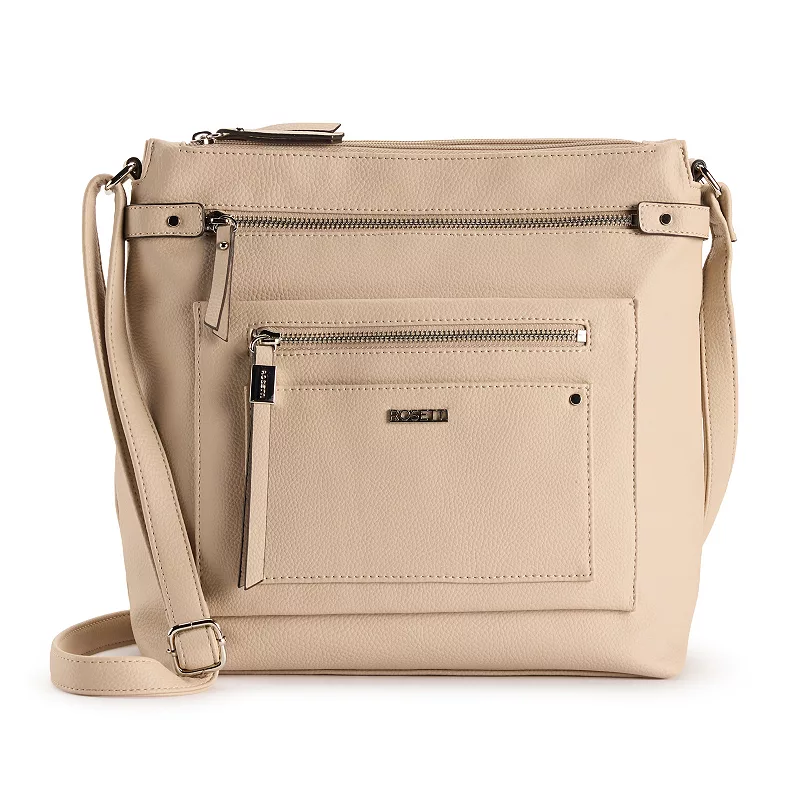
What Actually Matters in a Lightweight Organized Crossbody
The appeal of bags like Baggallini’s isn’t just the weight—it’s the combination of accessible pockets, durable nylon or polyester construction, and enough structure to keep contents from shifting into a jumbled mess. A well-designed crossbody in this category typically includes at least one exterior slip pocket for phone or transit card, interior dividers for wallet and keys, and zippers that glide smoothly even when the bag is packed full.
Material quality drives longevity more than brand name. Look for denier counts above 200 in the fabric spec, reinforced stitching at stress points where the strap attaches, and zippers with metal pulls rather than plastic tabs. Our Rosetti Zoya Large Crossbody Bag uses 400-denier polyester with bar-tacked seams at every junction, the same construction approach you’d find in mid-tier outdoor gear.
RFID blocking is no longer a premium feature—it’s woven into the lining of most travel-focused crossbodies now, including Zoya. The real test is whether the pocket layout matches how you actually carry things, not just how many pockets the product page lists.
How Rosetti Zoya Compares on the Features That Drive Daily Use
Zoya’s front panel holds two zippered compartments: one deep enough for a passport or small notebook, one sized for receipts and cards you need within arm’s reach. The main cavity divides into three sections with a center zip pocket, so your phone stays separate from your sunglasses case. Baggallini bags often use a similar tri-section layout, but Zoya’s center pocket is slightly wider to accommodate newer oversized phones without forcing you to angle them diagonally.
The adjustable crossbody strap extends to 24 inches on the long end, which works for both petite frames wearing it messenger-style and taller wearers who prefer the bag to sit at hip level. Strap hardware uses swivel clips rather than fixed D-rings, so the bag rotates naturally as you move instead of twisting against your torso. This is the same detail nursery gear engineers prioritize when designing adjustable harness points—small movement tolerances that prevent friction over hours of wear.
Where Zoya diverges is weight distribution: the back panel is slightly padded to prevent hard items like a compact umbrella or battery pack from digging into your side. Baggallini’s ultra-minimalist approach skips this padding to shave off ounces, but the tradeoff shows up after a long museum day or airport sprint.
Material Durability and What Happens After Six Months of Real Use
Lightweight doesn’t have to mean fragile, but it often does when corners get cut on reinforcement. Zoya’s polyester carries a water-resistant coating that beads light rain without requiring a separate cover, and the base of the bag has a reinforced panel so setting it down on pavement doesn’t abrade the fabric. After typical daily use—tossed in car trunks, slung over cafe chairs, packed into overhead bins—the high-wear points are the zipper tracks and the strap anchors.
We’ve seen enough zipper issues across the crossbody category to know that YKK coil zippers are the reliable baseline, which is what Zoya uses on every closure. If a zipper does eventually stick, it’s almost always debris in the teeth rather than a broken slider, and a quick clean with a dry toothbrush brings it back. Metal zippers would be more rugged, but they add weight and can corrode in humid climates.
The strap webbing is double-layered nylon with edge stitching, rated for 15 pounds of evenly distributed load. That’s more than you’d carry in a crossbody this size, but the margin matters when the bag swings against your body while you’re running for a train.

When a Tote Might Fit Your Needs Better Than Any Crossbody
If you’re carrying a laptop, a water bottle, or anything that exceeds the 9-by-7-inch footprint of a standard crossbody, the form factor stops being practical no matter which brand you choose. Crossbodies excel at hands-free carry for essentials—wallet, phone, keys, a small cosmetic pouch—but they force compromises once the load grows. A vertical tote with an optional crossbody strap gives you the flexibility to switch modes depending on the day’s requirements.
We wrote a full breakdown of when a tote makes more sense than a crossbody for different use cases, but the short version is this: if you’re adding items to your mental packing list and thinking ‘I’ll make it fit,’ that’s the signal to step up to a larger silhouette. Zoya works beautifully for travel days when you want your documents and phone secure and accessible without hauling a full day bag, but it’s not a substitute for a proper work tote.
For shoppers who need something between Zoya’s compact profile and a full tote, our Rosetti Tessa Crossbody Bag adds two inches of width and a slip pocket sized for a slim tablet, though it gives up some of Zoya’s streamlined look in exchange.
Finding the Right Balance for Your Carry Style
The search for a Baggallini alternative crossbody usually starts with price, but it quickly becomes about whether a bag’s specific layout matches how you actually move through your day. Zoya delivers on the fundamentals—organized compartments, durable construction, RFID protection—without assuming you need every premium feature or the brand name that comes with it.
If you prioritize hands-free carry, prefer your essentials sorted into dedicated pockets, and want a bag that holds its shape after months of use, Zoya is worth comparing directly against the Baggallini models you’ve been considering. The best crossbody is the one that disappears into your routine, and that comes down to fit and function more than any logo.
Common Questions About Switching from Baggallini to Other Lightweight Crossbodies
Zoya weighs 11 ounces empty, which puts it in the same range as Baggallini’s Everywhere Bagg and RFID Crossbody—most organized crossbodies in this category land between 10 and 13 ounces. The weight difference comes down to hardware choices and lining thickness more than the shell fabric itself.
If ultralight is the priority above all else, packable nylon slings from outdoor brands hit 6-8 ounces, but they sacrifice structure and pocket organization to get there.
The RFID-blocking lining in Zoya’s card pockets uses a metallic weave that attenuates signals in the 13.56 MHz range, the same frequency used by contactless credit cards and most transit passes. Independent testing shows it reduces signal strength below the threshold needed for skimming devices to capture data at typical contact distances.
That said, RFID skimming in real-world settings is far less common than online fraud, so this feature is more about peace of mind than addressing a frequent threat.
The main section’s center divider creates two side pockets, each about 4.5 inches wide, which comfortably holds a phone up to 6.5 inches diagonal in one and a bifold wallet in the other. If you carry an oversized phone case or a bulky card organizer, those two items will touch along the divider seam, but they won’t compress each other.
The front exterior pocket is sized specifically for quick-access items like a transit card or folded cash, not as overflow for the main compartment.
Adjustable straps use either slide buckles or ladder-lock mechanisms, both of which can slip under load if the webbing is too slick or the buckle is undersized. Zoya’s strap uses a metal tri-glide with teeth that bite into the webbing, which locks the adjustment in place even when the bag is fully loaded.
Fixed-length straps eliminate the adjustment mechanism as a potential failure point, but they also force you to commit to one wearing position, which is why most crossbody buyers prefer adjustable.
Baggallini’s brand equity comes from consistent quality control and a wide range of prints and colorways released each season. If you want a specific pattern or you’ve had good experiences with their warranty service, those are legitimate reasons to stay with the brand.
Alternatives like Zoya typically offer the same core features at a lower price point, but with fewer style variations and less name recognition. The functional difference—zipper quality, strap comfort, pocket layout—is minimal across well-made bags in this category.
Spot-clean stains with a damp cloth and mild detergent rather than submerging the entire bag, since water can weaken adhesive used in interior laminations. Let the bag air-dry fully before storing it to prevent mildew in humid climates.
Avoid leaving the bag in direct sunlight for extended periods—UV exposure degrades polyester fibers over months and causes colors to fade. If the water-resistant coating begins to bead less effectively after a year, a spray-on DWR treatment restores it.